"Give them the gift of words"

Ultimate Vocabulary EDU is the world's most advanced vocabulary learning system for schools. With Ultimate Vocabulary, you have your vocabulary teaching requirements completely under control.

Based on proven principles of cognitive science, Ultimate Vocabulary EDU contains all the features of Ultimate Vocabulary plus:

It's absolutely essential your students graduate with their vocabulary educational requirements met. With Ultimate Vocabulary EDU these vocabulary requirements are more than met. Students also improve academic performance, are prepared for standardized tests, and improve their confidence.

The next step is to see Ultimate Vocabulary for yourself. Simply fill out the form and we'll send you a free no obligation trial of the full version of Ultimate Vocabulary EDU.

7 Components Worth Remembering To Create A Great Blog Post


What makes a blog post worth sharing? Is it the language used, or the cute puppy images shrewdly embedded? The steps to a successful blog post are no mystery. There are certain components a post should include to make it shareable. The more of these components your post has, the better the likelihood it will be well-received by your online community.

  • Language and Style

And by this we mean the mood and tone you set with your post. Do you come across as an annoying know-it-all? Does your writing reveal any bias you might hold? Is your writing flowing with clear ideas? Do your phrases shows respect to your reader?

Pay attention to language use and style. Establish early on a style that suits your personality and niche and be consistent with it. People will judge you through your style, so it’s essential that your language communicates positive attributes and virtues, including respect and authority.

  • Formatting

Online content needs to be skim and scan friendly. In other words, you need to always keep in mind that your readers are busy, and your job is to help make their lives easier.

Write short paragraphs, and create summaries or take-aways for readers in a hurry. Use bullet points and numbered lists. Not only will using these formatting practices make your blog posts more reader-friendly, but they’ll also boost their shareability, because people are more likely to read them!

  • Smart Linking

You might be using links for SEO purposes, but that’s a different story. Links also help make your readers’ lives a bit easier.

If a blog post touches upon a previously analyzed post, don’t repeat yourself; create a link at the appropriate content and refer your reader to where you’ve fully explained the concept you’re mentioning briefly in the current post.

  • Calls to Action

If a reader enjoys your article, they will share (or comment, or read more, or buy your product) without your explicit direction to do so.

However, a call to action won’t hurt. It’s a direct pledge to your reader to respond if they have found something you’ve given them enjoyable, insightful, or useful.

A call to action at the end of your post in the form of question is highly likely to elicit some comments and shares, and it will serve its purpose, which is to create a discourse around your ideas.

  • Visual Stimuli

Online readers are often regarded as these easily distracted individuals who cannot stay on the page unless there are cute puppies or the latest high-profile celebrity to look at. The truth is not even close to this.

That being said, images can help bring a point across. Whether a literal or symbolic image, visuals  strengthen your post’s main argument and elicit the right emotions and actions in your readers.

  • Flawless

If a reader stumbles upon typos, misspellings, and grammar mistakes in every sentence, they will soon be annoyed and give up reading altogether. No matter how rock-solid your expertise and authority is on what you do, if your writing is laden with typos and other errors you are driving readers away.

For starters, make it a priority to improve your typing skills. This will ensure you make fewer typing mistakes because you will have improved your typing accuracy, which will also save you editing time. Typing your blog post faster will let you blog more often, too!

  • Killer Headline

A reader will often only read your headline. If a post is shared and shows up in a person’s Facebook timeline or their RSS feed, then they will only get to read the headline and perhaps the summary or the first two sentences of the text. That’s why headlines need to be extra carefully crafted so as to capture the reader’s attention through curiosity, awe, shock, humor or even disagreement.

Incorporating these components will ensure your blog post will be read and shared! Good luck!


Have something to add to this story? Share it in the comments

Principal Paul Carroll of St. Clare’s College Showcased Their Tradition: Providing Life, Leadership and Learning Opportunities to Students


Principal Paul Carroll


Canberra girls’ school St. Clare’s College will be celebrating 50 years of quality education in 2015. Principal Paul Carroll joined the school’s roster of dedicated professionals in 2012, continuing their tradition of providing students with the life, leadership, and learning opportunities that will help them become confident and contributing members of their communities.

7SR: You encourage your teachers to continue their own professional development, giving their educational needs the same attention as the students’ needs. Do the students see this process, and learn to recognize the importance of lifelong learning?

Yes the students are very aware of the process. When a staff member is away on professional development a relief teacher is employed for their normal class so they are reminded immediately that the teacher is on professional development. Teaching programs and classroom activities are often adjusted as a result of the PD. Our focus over the last eighteen months has been on “Visible Learning”, the research by John Hattie and part of the process is to involve students in requesting feedback on how learning is occurring in the classroom. This data has been invaluable in having the dialogue amongst the teaching staff on what quality teaching and learning looks like in the classroom. There are lists of students displayed in the College who are undergoing alternative programs, such as an Australian School Based Apprenticeships, as well as those previous students who have accepted University pathways or have undertaken post school opportunities. Some of these students return to school to speak to the current students about options beyond school.

7SR: Approximately 25% of the people living in Canberra were not born in Australia, and there are many immigrants from Vietnam and China. Are all of your new students fluent English speakers when they arrive on their first day of class?

There is a very small minority that arrive without being fluent English speakers. Depending on their circumstances they might attend an intensive language program at the Language School, participate in specialised language classes provided by community organisations or benefit from the support given by the College.

7SR: While all students get a thorough education in core areas like mathematics, science, and English literacy, there is also a strong emphasis on what some educators regard as “soft” subjects like visual arts, music, and drama. What do students gain from these classes?

I do not agree with the label “soft” applied to the subjects in creative and practical arts. Educators are well aware of the need to cater for multiple intelligences. All of the subjects across the curriculum complement each other and provide the opportunity for the students to experience many facets of learning that will develop their potential and enhance their gifts and talents.

7SR: Your school’s motto is “Seek Wisdom.” What does this motto mean to you personally?

“Seek Wisdom” is a timeless pursuit that encourages us to be open to the acquisition of an enlightened mind. As teachers we strive to bring knowledge and truth to the students and we present this through the life and teachings of Jesus and inspired by the example of St Clare. The students are encouraged and supported in making wise decisions as they grow to maturity and prepare to take their place in society.

7SR: You’ve got quite a few events planned for next year’s celebration of the school’s 50th anniversary. What are some of your ideas for making sure that the school enjoys the same success in the next 50 years?

The main focus will be to ensure the College remains relevant, vibrant and contemporary in providing the best possible education to the students that join the community. The College must maintain an authentic Catholic identity that is welcoming, open to all and witnessing to teachings of Jesus. There will be a continuing emphasis and commitment to ensuring quality teaching and learning experiences are made available for the students with a special emphasis on girls’ education. Extra-curricular activities will be supported to complement the students’ classroom learning and the governance of the College focusing on the aim to maintain and upgrade the facilities as funds become available.

Cross-posted on the 7 Speed Reading blog.


Have something to add to this story? Share it in the comments

What Parents Should Do To Keep Children Busy With After-School Activities


The dreaded first day at school is finally over, with no casualties. Now you’re already one week into the new school year. First, congratulations on the smooth transition from summertime to school time! Second, here are a few tips to make this school year the most constructive one yet!

As important it is to carefully plan for school, it’s equally important to organize your child’s after-school activities.

This will turn after-school time into a productive and interesting time for your child and boost their social, cognitive and psychological development.

Be reachable

Ensure that your young child has many ways to reach you, should they need to.

Have a neighbor be on call, in case your child needs something and you will not be available. Be sure to have an initial discussion with your child and the neighbor together, so that your child is confident in asking for help and will not hesitate to knock on their door or call them in an emergency.

Plan for sports activities

It’s important that your child doesn’t stay at home every day after school playing video games.

Encourage them to join a sports club or take up a new hobby.

Rather than dictating what sport they should follow, listen to what they say about their own needs and likes. This way, their chances of doing well at the sport and enjoying it will dramatically increase. Note that joining a friend at a sports activity works well in getting a child interested in a sport, especially if they’re reluctant to begin with.

Plan for self-development activities

Doing homework is not enough. While school is often difficult enough for a child, the adult workplace in their future is a cut-throat environment. If you do everything possible to ensure that your child is more than adequately prepared for that future, you will better their chances of excelling in life and in a career.

Include self-improvement activities in your daily home life to help your child overcome difficulties at school and acquire new skills and competencies. It’s especially important for younger students to initially focus on fun-to-use software that can help them improve their skills in things like vocabulary, spelling, and reading.

When a child is interested in a topic, they will start to be more involved in learning on a broad scale. Their eagerness to learn will inspire them to study even harder and will grant them a sense of achievement.

Plan for playtime

Even fun learning activities still require focus and concentration. Make sure you keep things fun, and don’t create an overwhelming after-school schedule for your child.

Remember that children need a break too, and time to play. Be sure that you have a good mix of study and play – and look for ways to combine the two.

Ensure these activities are not desk-bound. Instead of making play time a synonym for video games and TV watching, encourage your children to take play outdoors.

Playtime should be social and interactive whenever possible. It should cultivate a range of social skills and competencies necessary for your child’s smooth inclusion in various communities: family, school, and friends.

The benefits of after-school activities

After-school activities have long-term, substantial benefits for your child’s physical, cognitive, and social development.

It’s a mistake to assign after-school activities to a catch-all category of “something my child is doing before I get home from work.” You cannot afford to take after-school activities lightheartedly, because they can be incredibly useful. With carefully planned activities, you ensure your child is safe and productive while you’re at work and that their interest in learning and social activities remains high.

Leaving your child alone and unsupervised every afternoon will more likely make them less eager to engage with others socially — something that could compromise their social skills and even impede their academic performance.

After-school activities help children learn the importance of creativity and of being active and social. It cultivates a feel-good climate of collaboration, interaction, and learning that can contribute to your child’s development and future success.


Have something to add to this story? Share it in the comments

Why Ultimate Vocabulary Made TopTenReviews.com


Here at TopTenReviews.com, we gave Ultimate Vocabulary an excellent rating of 9.9/10 in a comprehensive review of the vocabulary software. The main reasons for this high rating were Ultimate Vocabulary’s huge dictionary of words and its range of interesting learning activities. Overall this is a very high-quality system for improving vocabulary.

High-Quality Instruction

Ultimate Vocabulary teaches more than 140,000 words. That might seem like an overwhelming amount, but the vocabulary software offers a variety of learning activities to help users come to grips with new words. Users can become familiar with words using flash cards or learn to use them through word matching and sentence completion exercises. There are also fun games, as well as tests, which users can use to assess their progress. There is just enough repetition in the exercises to make the new words stick without becoming boring.

Easy to Use

The interface of Ultimate Vocabulary is very easy to use. The sidebar facilitates navigation by allowing users to quickly jump to any section they want to explore. If you get bored during the middle of playing a game or realize that you’re not quite ready to tackle it yet, no problem. Users can simply jump over to another section to take a different approach, then return to the original game later.

Easy to Track Progress

One very useful feature of Ultimate Vocabulary is that it automatically records how much time a user spends on each type of activity. This allows users to easily recognize at a glance that they are neglecting certain sections or becoming too focused on particular games. It also shows how much time has been put into the learning process overall, so users can tell how quickly they are progressing.

Extensive Vocabulary

We found that Ultimate Vocabulary taught more words than any other vocabulary software that was reviewed. The 140,000 words that Ultimate Vocabulary teaches are broken down into 180 different word lists. Users can choose to learn just the words that are most relevant to them, or gradually work their way through the whole set. The software includes word lists that are specifically tailored to the GRE, SAT, TOEFL, and GMAT exams, which means that Ultimate Vocabulary could be very helpful for students who are preparing to take those particular examinations.

Technical Support

eReflect, the company that makes Ultimate Vocabulary, offers a year-long money-back guarantee for any users who find that they are unsatisfied with the software. Users who are having technical problems can contact customer support by phone or email for help. There are also some useful tutorial videos included with the software that can be found in the Step-By-Step Success section, accessible from the sidebar.

Summary

TopTenReviews also found that Ultimate Vocabulary is likely to be a useful program for a variety of different types of students. English language learners will benefit from the most common English words lists, while more advanced speakers can use the software to help them prepare to take certifications, such as the GRE or SAT. The user experience is highly customizable, allowing the learner to set the level at which they want to study and the pace of progress.


Have something to add to this story? Share it in the comments

How Speech and Language Therapy Helps TBI Survivors


People who’ve suffered and survived a traumatic brain injury (TBI) can see tremendous improvement after the event with the help of speech and language therapists. The recovery process might seem long and tedious, but with the guidance and scientific rigor provided by a speech therapist, the recovery comes faster. The results can often astonish both the recovering person and their family.

Coping with lost or damaged language skills after a TBI accident

One of the most stressful issues TBI survivors need to grapple with is their difficulty with verbal communication. Some find themselves with speech deficits and mild to serious cognitive impairment after a TBI accident. This not only is mentally and emotionally frustrating but it also disrupts most of the TBI survivor’s daily activities.

Common language issues include the inability to recall the appropriate word or follow through with a discussion, difficulty understanding written language, and having unusual trouble in reading, spelling, and using language efficiently.

For many people, this difficulty in communicating is aggravated due to physical limitations, again result of the acquired brain injury. Many TBI survivors are left with facial deformities that affect their mouth and lips and make speech troublesome, or make them self-conscious about trying to speak.

When TBI affects language performance, language therapists offer a systematic solution for gradual rehabilitation.

Evaluating language challenges

A language and speech therapist will first identify the linguistic skills brain injury has affected. This gives a clear picture of the situation, and the language therapist and the survivor’s relatives can use it to decide what the best course of action is.

Addressing language challenges in TBI survivors

For TBI survivors with extensive brain damage, language and speech therapists often focus on training relatives and friends to understand the survivor’s minimal or challenged communication output.

At the same time, the TBI person learns practices that help them communicate mostly through sensory and auditory output with their environment, if verbal communication is out of the question.

Another issue speech and language therapists immediately attend to is offering comfort and peace of mind to the TBI person. They offer psychological relief and support to help them get rid of their bewilderment with their acquired limitations.

Regaining basic cognitive and linguistic skills

For TBI survivors with mild damage, speech therapists aim at recuperating basic skills:

– Clear, understandable speech
– Putting together thoughts and expressing them, recalling arguments in conversation
– Problem solving and decision making
– Improving memory performance
– Improving literacy skills such as vocabulary use and spelling

With expert and systematic guidance TBI survivors can in many situations fully recover and regain their cognitive and speech skills.


Have something to add to this story? Share it in the comments

Brand Mentions On Twitter Catch Consumer Attention


What drives consumer action? A new Twitter study titled “Discovering the Value of Earned Audiences” reveals that when consumers are exposed to brand-based tweets, this positively affects their online and offline behavior.

The study findings were revealing.

Consumers engage with brands, they don’t just follow them. The study confirmed that brands drive the conversation on Twitter and improve the way people interact with them. Active brands tend to have not just passive followers, but potential consumers that are keen to engage with that brand.

People don’t see brands as remote, faceless companies; they see a media-savvy company as a responsive, social, and friendly entity they can engage in conversation with, a fact that adds further importance in how much leverage brands actually have over consumer opinion.

Brand engagement on Twitter improves consumer action. The study revealed that half of the 12,000 study respondents took action immediately after seeing a brand tweet. This action included visiting the brand’s site or Twitter page.

Brand engagement improves purchase decisions. The figures are indeed telling; almost 1 in 5 Twitter users will eagerly retweet a tweet that mentions a brand. And the same percentage (19%) is contemplating a purchase after being exposed to a brand-related tweet, proof that brand-based social engagement does drive consumer behavior.

Non-brand originating tweets encourage more action from consumers. When tweets originate from a non-brand related source, then Twitter users are more likely to take some online or offline action related to that brand. Only 43% of the survey respondents confirmed that brand-initiated tweets encouraged them to act.

Other important figures to consider:

8 in 10 respondents said they had mentioned a brand in their own Twitter activity at some point during the measurement period (September 2013 – March 2014).

20% of the respondents said they do online research on a brand after being exposed to a brand tweet.

About 58% of the 13-to-17 age group take action after being exposed to a brand tweet.

This Twitter study is revealing for both big and smaller brands and companies. Social media marketing does pay off as consumers engage with brands in ways that are profitable and beneficial for the brand.

By crafting shareable tweets you can increase user engagement with your brand or product and ultimately even boost your sales. Remember that a compelling tweet needs the following ingredients:

– Relevant and targeted vocabulary
– Catchy intro
– A call to action
– An image or video
– Original, witty content
– Brevity
– Tweet (about) news


Have something to add to this story? Share it in the comments

Brand Mentions On Twitter Catch Consumer Attention

SPOTTED: 7 Grammatical Errors in Social Media Posts!


1) Still Can’t Determine the Difference between There, Their and They’re?


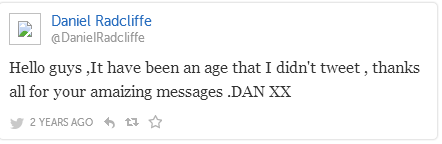
2) Even Celebrities Get Into Small Apostrophe Mistake


3) Celebrity Number 2 Committing A Mistake


4) Another Mistake From Celebrity Number 3


5) So Many Mistakes, Indeed!


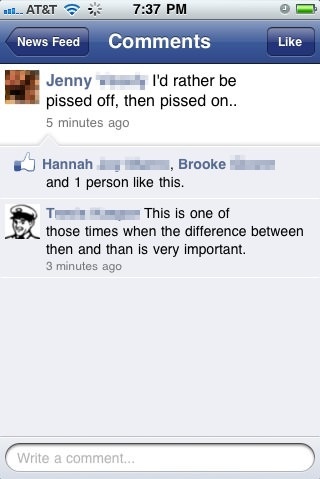
6) Know the Difference between Then and Than


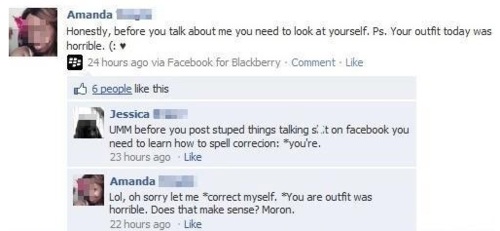
7) Before You Criticise, Double Check If The Post Really Has An Error In It


Have something to add to this story? Share it in the comments

SPOTTED: 7 Grammatical Errors in Social Media Posts!

When Good Vocabulary Is Not Enough


Which do you think is more important, good vocabulary or good spelling skills? Many teachers would tell you that the main objective for young learners is to expand their vocabulary so they can communicate efficiently and accurately with their peers.

A good vocabulary is key to being a competent speaker. Having the words for the thoughts, feelings, ideas and notions you want to communicate makes it easier for you to get heard, convince people to follow you, and get what you are after.

However, as many teachers would also tell you, good vocabulary is not enough. Having an extensive lexicon filled with impressive and obscure words doesn’t mean you are a competent language user overall. If your spelling skills are weak, then your written language output will more likely suffer too. What’s more, it will make you look bad.

Take an 8th grader’s essay. They might be using vocabulary that’s well above their grade level and that’s impressive and worthy of praise, but if that same essay is laden with misspellings, then the first impression the teacher gets is that this student is sloppy, pays no attention to detail, and needs to work more on their language skills.

Bad spelling skill ruins communication on any level, and overshadows any other language skills you might have. Which is, of course, a pity. English spelling is notorious for its absurd patterns, lack of rules, and thousands of loanwords from other languages, so what’s a frustrated ESL student to do?

Fortunately, good spelling skills can be mastered, and you can become a proficient speller — we’re talking spelling bee champion kind of level. The trick is to have a systematic approach to spelling mastery. Of course, a love for language will also help!

If you’re a teacher, ensure you devote ample time to teaching your students how to spell, and if you are a student don’t give up on your spelling practice.

Spelling is an acquirable skill you can easily master as long as you are willing to learn. Invest in a spelling improvement program or practice your spelling with the help of a friend or teacher. The Internet has also many free quality resources for you to practice with.

To become a proficient user of the English language don’t focus on vocabulary only. Make sure you cultivate your spelling skills as well, because it’s an equally important skill that can make – or break – your language skills in general.


Have something to add to this story? Share it in the comments

When Good Vocabulary Is Not Enough

What Words To Use In Headlines To Increase Engagement


You want more user engagement. But then, so does everyone else.

What makes a piece of online content shareable? What urges people to comment on and engage with a brand? Is it the images? The tone? What kind of influence do words really have?

One of the most talked-about topics on the subject of creating online content is headlines. There’s an ever-growing body of literature on how to craft the most brilliant, share-worthy headlines, the ones that will prompt your readers to engage with you.

A headline might seem like something you don’t need to waste too much time on, but the truth is that the headline is generally the only thing a reader will read. It’s the headline that makes them decide whether your 1,200-word post is worth their time.

However, even TL;DR (Too Long; Didn’t Read) pieces do get shared and commented on, and this is entirely because of an effective headline.

When it comes to crafting your content, word choice for your headlines is the alpha and the omega. Here are a few tips to increase engagement with a few tweaks on how you craft your headlines.

Social Media Matters

There’s no single rule as to what kind of words work well in headlines. According to QuickSprout, words like contest and coupon don’t increase engagement on Facebook.

On the contrary, if you use words like submit, deal, and discount on Facebook you’re more likely to get a lot of shares, likes, and comments.

The important thing to take away here is to tailor your content for each platform and medium. Never use the same copywriting formula across different social media, because it will cost you time and lost earnings.

Not all social media sites are created equal; the demographics and types of consumers who use each can vary widely, and it’s your responsibility to know what resonates with whom, and where.

QuickSprout reports that for Facebook you’re more likely to boost user engagement with words such as these:

When

Tell us

Comment

Post

Would

Inspire

Win

Event

Blacklisted words: contest, promotion, sweepstakes, coupon

Twitter is a completely different realm with different user engagement trigger words. QuickSprout says these are the words to focus on in Twitter:

Help

Retweet

Social

Check out

How to

Please

LinkedIn is a professional social network that calls for a more formal discourse. Words that are more likely to boost engagement in this realm are:

Developed

Improved

Under Budget

Researched and Accomplished

Specific Words To Use In Your Headlines

There’s a lot to learn about the best words to use in your social media content. Be sure to also be aware of meaningless buzzwords you should avoid at all costs.

Knowing what works well with which social network is not enough. You also need words that work well across the board.

The words, you, what, how, and when are among the most popular words in headlines for articles whose content goes viral.

Things Get Personal

Among the most popular words that you will find in a viral headline are the words you (588 instances) and your (202).

This indicates that when headlines directly address the reader they have a better chance of getting shared, retweeted, commented on, and liked by people.

When it comes to headlines, what makes them irresistible? When they’re in the form of a question. Question headlines address the reader directly and this directness makes it hard for a reader to skip over or ignore it.

Take HappyPlace’s popular series of posts that follow the same structure each time:

5 Things You Should At Least Pretend To Know Today

This is a headline that targets people’s need for being “in the know.” To intensify this insecurity, the headline editor makes sure they reference the reader in the headline so that there’s no question who the headline is talking to. Can you resist clicking to read?

Takeaway

Use the words you, your, this, when, what, and how in your headlines whenever possible.

These words take an abstract concept and make it more specific. Using this makes a headline more immediate, specific, and personal. The words when and how can be used to create questions, and
question headlines attract engagement.

Lastly, don’t forget to tailor your headlines for each social network for maximum results.


Have something to add to this story? Share it in the comments

What Words To Use In Headlines To Increase Engagement

Why Writing Skills Need To Be Perfected


Can’t average writing skills meet your needs in most situations? I’m afraid the answer is “no.” If you want to move ahead in your career and personal life you need above-average writing skills.

There’s more to writing than you might think

Writing and its associated skills form a complex network of competency that rests upon many other important abilities. To be a competent writer, you need to have mastered spelling and proper grammar usage, you need to have a rich and deep vocabulary, and you must have the ability to express yourself with clarity and eloquence.

What this means is that good writing skills will be the proof of your skills in many other areas as well. You will come across as a smart, competent person — a prerequisite for any job on today’s competitive market. It’s not an exaggeration to say that there’s no better self-promotion tool than impeccable writing skills.

Your writing is a reflection of who you are

Even if your job doesn’t require a lot of day to day writing, whenever you’re required to write something, whether that’s an email or even a simple text message, people will still judge your intelligence and competence based on your writing.

While it may sound condescending and presumptuous to judge a person solely on their writing skills, it happens. People use the written word to see how a person thinks, what their values are, and what principles and ethics their lives are governed by.

Great writing skills help you construct and project a competent, intelligent, and persuasive personal brand. Bad writing skills will more likely cost you a shot at better career prospects.

The written word is supreme

Most office-based jobs require that you master written communication skills. In fact, most formal communication in companies is through the written word. Government proceedings, legal documents, and contracts are not orally communicated, they’re always expressed through formal writing.

Everything worthwhile and binding is in written form so it’s crucial that you’ve mastered writing skills by the time you start your career. In fact, the earlier you learn these skills, the better, since they will help you get the education you need to succeed in that career. You need to be able to write and communicate in a variety of contexts — a Q3 report is not the same as writing a grant proposal— but also be able to understand and process formal language content and avoid any misunderstandings and errors.

Read voraciously to improve your vocabulary, and when you are writing, try keeping your sentences short and simple even when using that advanced vocabulary. Follow formal style and format rules to get the most professional end result, and always spell-check and proofread your content. Writing skills are valuable, and worth the effort they take to acquire them.


Have something to add to this story? Share it in the comments
Why Writing Skills Need To Be Perfected