"Give them the gift of words"

Ultimate Vocabulary EDU is the world's most advanced vocabulary learning system for schools. With Ultimate Vocabulary, you have your vocabulary teaching requirements completely under control.

Based on proven principles of cognitive science, Ultimate Vocabulary EDU contains all the features of Ultimate Vocabulary plus:

It's absolutely essential your students graduate with their vocabulary educational requirements met. With Ultimate Vocabulary EDU these vocabulary requirements are more than met. Students also improve academic performance, are prepared for standardized tests, and improve their confidence.

The next step is to see Ultimate Vocabulary for yourself. Simply fill out the form and we'll send you a free no obligation trial of the full version of Ultimate Vocabulary EDU.

The Rise Of Social Media Marketing As The New Customer Relationship Management


Does your company have a social media marketing plan? Social media is more than increasing brand awareness and engaging with your existing and potential customers through online discussions and sharing.

Social media marketing is the new customer relationship management model. A space where you take advantage of your customers’ online presence in order to convince them you’re a worthwhile investment.

Social media marketing, when successfully implemented, improves customer relationships by achieving the following:

– Customers feel valued, respected, and listened to – a prerequisite for repeat sales and customer retention.

– Customers feel understood – a prerequisite for gaining consumers’ trust.

– Customers’ complaints are listened to and corrected, making customers happy and more likely to continue doing business with you.

– Long-term relationships with customers are created and nurtured, driven not by short-term profit but by building a client base of loyal customers.

The relationship is equal and not promotional, allowing the client to more easily engage with you, rather than be discouraged by impersonal spam-based e-mail campaigns.

In a sense, social media marketing is another way of saying “relationship marketing.” We use social media as powerful, affordable, and effective tools for building stronger client-business relationships and forging new ones.

How do you make social media marketing really about customer relationship building and maintenance?

Join the conversation

Don’t wait for people to retweet an event you’re promoting, or for someone else to share it through Facebook. Dive into what’s already being talked about. See what things are trending that could relate to your brand, and jump in the conversation.

Joining the conversation doesn’t mean blatant, relentless self-promotion, however. Keep your focus on:

– Discussing new trends and discoveries in your industry and niche.

– Supporting and promoting like-minded entrepreneurs and individuals.

– Finding common ground with your followers to discuss their needs and learn their expectations of your brand.

For building solid customer relationships on social media you need to be proactive, approachable, and relevant. What’s more, you need to stick to a daily social media schedule.

Get rid of the “pitchy” attitude

Of course, the main idea is that you will promote your services and goods through social media — this is your ultimate goal, after all. But you don’t have to be obvious about it.
Devote a daily tweet and Facebook post to reminding your online followers about an offer, a competition, a sale, or a product. However, don’t use social media as if it’s an advertisement, use this outlet as any other user would: to interact, share, and discuss things you’re passionate about.

If your audience senses a “pitchy” attitude – in other words, if they think you’re only giving them a sales pitch – they will be discouraged from engaging with you in the future. This will damage your customer relationships as you will soon be regarded as a profit-focused company that doesn’t truly care about its clients.

Polish your language skills

You might have a social media marketing guru handling your customer relationships online, or you might do it yourself. Whichever option you choose, make sure your grammar, vocabulary, and spelling are flawless.

Your vocabulary and general choice of words reveal a lot about your brand, your mission, and your ultimate goal. Using the right vocabulary can in fact raise you in the eyes of your audience as an expert, leading company that knows what they’re doing.

Word choices should be carefully considered, even on what might seem to be the most casual of tweets. Use language your readers can empathize with and feel enthusiastic about. Lastly, always do fact-checking and spell-checking before publishing your tweets and posts!

By implementing these principles, you will ensure your social media marketing improves customer relationships and helps your business flourish.

Cross-posted on the Ultimate Spelling blog.


Have something to add to this story? Share it in the comments

There Were Never Any “Knaussgaard-free days” in Norway


Dan Bloom

How does public relations lie get started in the book business? Some savvy PR person or editor gets it into their head to start a harmless rumor about something or other and the thing takes off. Example, Karl Ove Knausgaard is now the author du jour in the English-speaking world. And every article you read about him and his 6-volume memoir titled “My Struggle” says that the books were so popular in his native Norway when first published that, depending upon who believe, the government or the corporate heads or lunchtime cafeteria mavens dictated that there had to be “Knaussgaard-free days” when one was not allowed, inside the borders of Norway, to talk about this book, not at work, not in government offices, and not even at lunch in the company cafeteria.

Now if you believe that whopper of a PR white lie, and a good one at that, I have a bridge to sell you in Brooklyn. You see, this PR fib has gone viral outside of Norway, and it’s been repeated over and over
in such fact-checking publications as The New York Times and the New Yorker. Only thing is that nobody stopped to fact-check this PR lie.

I did. There were never ever any Knausgaard-free days in Norway. Not once, not once, not once. And not one Norwegian newspaper or magazine has reported this. Only the naive press in the UK and in America. Australia, too.

But the fact is that these so-called Knaussgaard-free days were the work of a savvy British publisher in London, who sort of told a lazy reporter there that yes there were many, many Knausgaard-free days in Norway.

I have a favor to ask the fact checkers at the Times and the New Yorker. Ask your fact-checkers to check on this. Ask British editor Geoff Mulligan, who took a mulligan with this shot, if it was really true and how did he know? Geoff?

And then, please show me one source or reference in Norwegian or in a Norwegian newspaper or magazine about these so-called K-free days. Zero, zilch. This entire thing was made up to create buzz, in an innocent yet untruthful way. And now every media outlet in the non-Norwegian world falls for it.

Item: a recent New Yorker blog post notes: ”…some employers have had to impose Knausgaard-free days in the workplace.” Some employers? Which ones? Show me one link or reference from inside Norway. There is nothing about this white lie in Norway.

Some non-Norwegian sources say these K-free days were imposed by employers, other say they were imposed by the government for government offices, some say the entire PR white lie is a complete lie and never happened at all. A Norwegian man on Twitter inside Norway says, no, it was just for lunchtime breaks and it was voluntary, he heard. He heard. Again no links or references. You believe this? It never happened.

The New Yorker teases us where: ”Once you have begun reading the books in Karl Ove Knausgaard’s six-volume autobiographical novel, “My Struggle,” it is difficult to stop talking about them. In the author’s native Norway, where around one in nine people have purchased copies, some employers have had to impose Knausgaard-free days in the workplace.”

Sorry, this never happened. The New Yorker did not fact-check this. I did. We have 3 more volumes to go in English for the rest of the book in the series and for sure there will be more articles and reviews that tell us that there were K-free days in Norway when people were not allowed to discuss the books at work, maybe even at home.

And who imposed this rule in Norway? The government? Corporate heads? Cafeteria mavens?

Friends, this never happened. I wish someone would check the facts.

————–
About Author
Dan Bloom is a freelance writer who blogs
at CLI FI CENTRAL.


Have something to add to this story? Share it in the comments

Ultimate Vocabulary Software Evaluated By Range Of Reviewers


Ever wonder what people who speak with such ease and charisma have done to become so influential and alluring? More often than not, their vocabulary has great depth and breadth, and they’ve mastered language use and enriched their language with concepts, ideas, and nuances so they can make every sentence accurate, colorful, and vibrant.

A speaker is effectively a painter. The more competent you are in mixing verbal colors, creating new variations and hues, the more impressive the end result will be. This means that the more constricted your word palette is, the less colorful and interesting your speech becomes.

Ultimate Vocabulary™ is like a variegated palette that equips people with the colorful words they need to speak accurately, masterfully, and above all effectively.

Ultimate Vocabulary™ is developed by eReflect, a leader in self-education software. The program has been evaluated by numerous high-profile organizations and companies. The reviews provide proof of the software’s effectiveness.

Top Ten Reviews editors award the 2014 Excellence Award to Ultimate Vocabulary™

A trusted software reviewer, TopTenReviews.com, has recently published its vocabulary building evaluations and has announced that Ultimate Vocabulary™ is at the top. The software was awarded both the Gold and Excellence 2014 awards by the editors of

TopTenReviews, proof of its unrivaled effectiveness.

With an overall rating of 9.9, the editors praised the software’s interactive, fun games, its breadth of lessons and activities, its cutting-edge, user-friendly technologies, and of course its larger than usual word database of over 142,000 words.

Word-Buff gives a verdict on Ultimate Vocabulary™’s effectiveness

Word-Buff is yet another established and trusted education-related specialist. Ultimate Vocabulary™ remained high on this reviewer’s list as well. The site’s owner, Derek McKenzie, teases apart every feature and tool of the software, mentioning both the pros and cons of the vocabulary builder only to finally conclude, “Compared to other programs Ultimate Vocabulary is by far the most sophisticated vocabulary builder I’ve used to date.”

Ultimate Vocabulary™ helps people expand their active vocabulary

In an in-depth interview with Marc Slater, managing director of eReflect, the company that developed Ultimate Vocabulary™, Slater discusses the advantages of owning a rich lexicon, and concludes that one way people can make a timeless investment in their own self-improvement is to improve their vocabulary with the help of a vocabulary builder.
The combination of ready-made, expert-developed word lists and the ability of each user to create their own word lists gives learners the both essential guidance and free rein to have the ultimate learning experience, one that leads to new vocabulary mastery.


Have something to add to this story? Share it in the comments

Get Inspired! Wise Words Written & Spoken By Influential People (PHOTOS)


Oscar Wilde on Ambition

Mahatma Gandhi on Change

Albert Einstein on Creativity

Walter Disney on Dreams

Nelson Mandela on Education

John Legend on Experience

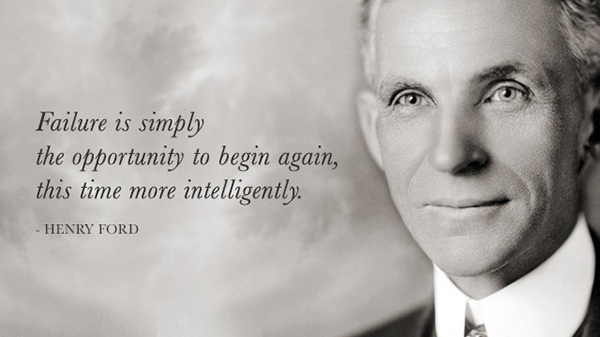
Henry Ford on Failure

Mark Twain on Kindness

Aristotle on Knowledge

Albert Mohler on Leadership

Thomas Edison on Opportunity

Winston Churchill on Public Speaking

Steve Jobs on Time

Martin Luther King, Jr. on Words & Silence


Have something to add to this story? Share it in the comments

7 Things To Remember When Blogging For Business


Online business marketing requires a comprehensive strategy if it is to have any chances of increasing sales and profits. One often overlooked aspect of business marketing is blogging, which if done strategically can boost your online presence, make your brand more relevant, and of course encourage lead generation and sales.

To be successful, business blogging needs to follow the foolproof tactics that big firms are using and which have been proven to work. Business size is truly irrelevant, as the Internet is an equally accessible tool for marketing your business online.

So what’s worth implementing and what’s no longer efficient when it comes to business blogging rules?

Offer relevant, significant insights, ideas and tools.

Don’t advertise your company or small business. No one likes a shameless advertiser. Rather, actively and substantially create content that’s meaningful and significant to your readers. Think about it. If your content is first-class, your followers won’t think twice, they will spread the word, simply because they find value in your blogging.

Become your industry’s ambassador

Rather than focusing on what you do and what you’ve achieved, it’s more worthwhile to share with your followers what your industry does and where it’s heading.

Give them access to facts, strategies, and ideas otherwise inaccessible to them. Becoming a reporter on your own niche or industry offers much more value than simply sharing one single perspective. Focus on the wider picture, give your readers a sneak peek into your industry as a whole – its trends, its new tools, the long-forsaken approaches, the promising new potentials.

By committing to providing persistently valuable content that’s sharable and valuable you ensure your blogging efforts will pay off.

Prove your value as an industry expert

There are many, many bloggers out there. To stand out, you have to establish yourself as an industry expert. This of course cannot be done overnight; it requires commitment, passion, and a plan.

What sets expert bloggers apart from the crowd is that their followers automatically turn to their blog as a resource of valuable, up-to-date content; readers know they blog about significant and tangible issues. An industry expert is a passionate professional who’s always ahead of trends, in line with current approaches, and has sound, fact-based viewpoints on their industry’s future. These are reasons why expert bloggers develop a solid, ever-increasing following.

What’s more, an industry expert shares ideas or insights bound to overhaul their industry or the way people conceptualize it. Can you be such a blogging expert?

Be part of your community of readers

Blogging is not about accentuating hierarchical differences or the consumer-business relationship.

If you advertise your product constantly, you drive your readers away; if you interact with them you increase engagement. Dial down any loud differences, don’t demand, don’t dictate. Instead, share, inquire and respond to your readership. Efficient blogging rests on the idea of you being a true part of the community you’ve created.

Encourage reader engagement

Bloggers tend to lose readers because they assume a falsely superior stance in relation to those readers. Expert bloggers, on the other hand, are the ones who creatively, persistently and strategically engage with their readers. By doing this, they tend to increase their readership and encourage follower loyalty.

Follow back your readers, comment on their reactions, share their ideas, answer their questions and overall engage with them at every level possible through your blog platform and other social media to ensure they will continue reading your blog.

Don’t just assume you know what readers want. Listen to their ever-changing needs, eavesdrop on what they’d like to read about, and provide it to them. And don’t forget to reward followers and readers with special, super-great quality content through email newsletters, exclusive free downloads, or promotions of ebooks and products  that might be of use for them.

Be unique, fresh and unconventional

Don’t just recycle others’ ideas, find new perspectives to look at things from, and stretch out your scope of issues to discover new approaches to existing ideas.

Do your share of curation; show your readers other trusted resources for valuable content similar to yours. Show your skills in critically processing different viewpoints or approaches and your ability to express a uniquely different, but equally valuable, interpretation.

But don’t forget to provide unique, fresh content regularly on your own site. This is what will establish you as an authority and the go-to blog for the latest developments in your industry or niche.

Engage with leading experts in your field

Don’t shut yourself out of the world. Doing interviews, holding mini webinars, or having giveaways for dedicated followers is a great way to strengthen the reader-blogger bond and consolidate long-term loyalty.

Invite guest bloggers to your site. It increases both blogs’ exposure to new audiences and it provides new ideas and strategies, all the while reminding your readers of your active involvement in your industry. Ask top bloggers to be featured in their blogs as a guest blogger or encourage others to do the same at yours.


Have something to add to this story? Share it in the comments

Cross-posted on the Spreeder blog.

German Professor in Tokyo Creates ‘Cli Fi’ List for Climate Novels at Goodreads (Guest Post)


Dan Bloom

If you start browsing the Web for ebooks and novels about climate change issues, within minutes you will come upon a Goodreads list created by Karl-Friedrich Lenz, a German professsor teaching in Japan and a ”cli fi” novelist himself.

Professor Lenz has set up a page at Goodreads titled ”Cli-Fi: Climate Change Fiction” that currently lists over 50 climate-themed ebooks and novels, with a submit button promising the addition of more cli fi novels listed there in the future.

Lenz told me that anyone can contribute a title, and that he welcomes all cli fi authors to the list, from all countries and in any language.

From Ian McEwan’s “Solar” to Kingsolver’s “Flight Behavior,” there are dozens, if not hundreds of cli-fi novels to list at our Goodreads page, according to Lenz.

Cli-fi novels explore climate change themes and are part of a new genre of literature that encompasses climate change fiction, Lenz says.

“I started the ‘Cli-Fi’ list at Goodreads, which may be of interest to people worldwide,” Lenz told this reporter. “I have written three SF novels with climate change as the main theme, and with a view to not only showing the problem, but also a solution. I am distributing these books as free PDF files on my blog.”

With the New York Times embracing the ‘mushrooming’ genre of cli-fi, Lenz hopes to see his list grow.

A graduate seminar at the University of Oregon in America focuses on “films, poetry, photography, essays and a heavy dose of the mushrooming subgenre of speculative fiction known as climate fiction, or cli-fi,” the Times reported. So now it’s official: Sci fi has a new cousin in the literary arena and she’s called cli-fi.

According to the Times account, novels set against a backdrop of climate change are beginning to make their mark on the literary scene, with books such as ”The Wind-up Girl”, by Paolo Bacigalupi.

Cli-fi novels and movies “fit into a long tradition of speculative fiction that pictures the future after assorted catastrophes,” the Times reported.

Thirty-something Nathaniel Rich, who lives in New Orleans and often writes for the Times oped pages, was quoted by the Times as saying: “You can argue that [trying to grapple with the fragility of our existence] is a dominant theme of postwar fiction. It surprises me that even more writers aren’t engaging with it.”

“The climate-change canon dates back at least as far as ‘The Drowned World’ written in 1962 by J. G. Ballard,” the Times reported. It is just “mushrooming” now. The term has been popularized over the past 12 months in a concerted public relations campaign led by a climate activist from Boston.

“I feel that by giving a label to climate-themed novels and movies, it can help readers and viewers focus on the issues involved,” the climate activist said. “The response so far, over the past year especially, has been positive and welcoming. Many writers have written to me and told me about the novels they are writing and that they are glad that there is a genre that they can fit their novels into.”

So Professor Lenz’s Goodreads list fits the bill, exactly. The arts have an important role to play in the way we look at climate change and global warming.

————–
About Author
Dan Bloom is a freelance writer who blogs
at CLI FI CENTRAL.


Have something to add to this story? Share it in the comments

Educational Connection Towards Excellence With Prof. David Pecoraro of www.studentcaring.com


Colleges years are stressful times, and students can benefit from good advice given by people who know what they’re going through. Often that advice comes from other current or former students; after all, who knows a student’s issues better than a fellow student? Well, sometimes a teacher does. The advantage that a teacher has is that they’re able to stay outside of the stress and emotion that the student is experiencing, and provide thoughtful, rational, and helpful suggestions to solve the problems that they’ve watched crop up over and over again in their classrooms. A new website created by two university professors gives students the resources they need to make the most of their college years.

UV: Prof. Pecoraro, you talk about your love of teaching and the importance of helping instructors find ways to work with their students to develop a good environment for learning. If a student isn’t finding that connection with their teacher, what can the student do to improve the situation?

David Pecoraro (DP): When I began to teach I discovered that I had the ability to teach a student something and they could repeat it and make money. After five years, previous students were coming back for a visit or writing to let me know that they had not just made money on a first job, but had found a career and life direction. Discovering that I was doing much more than just helping my students to make money prompted me to take my job to a whole new level of excellence and focus.

As I became more experienced my colleagues elected me to lead faculty development initiatives with the focus on providing educational opportunities to improve teaching. At the universities where I did (and do) this, I discovered that there was a need for professors, who were hired for the knowledge and degrees that they had, but had no prior experience about how to teach. This too was rewarding because I was not only helping the professor, I was helping all of their students. All too often, colleges put their resources toward many, many, areas which have nothing to do with the most important thing; teaching excellence.

Students who are not “connecting” with their professors can be in a tough situation. Nothing in our world is more complex than the relationship between two people. We are all unique and when we connect, we are grateful. When we do not, there is no one answer that will work for every student and their professor.

In the classroom, the responsibility is primarily with the professor to connect with and teach whoever is in their class. It is the responsibility of the student to work hard and follow the professors guidelines for learning, ideally set forth in the course syllabus. If the student is still struggling to “connect”, they can (and should.):

  1. Schedule a time to meet with the professor during their office hours. (Don’t think of their office as “Teacher’s Turf,” it is a meeting place for one to one learning, and you need to become comfortable with that which is uncomfortable). Students, get your monies worth! The professors office is also a place where you may discover more about them as a person and not just the person who teaches you.
  2. Exceed the professors expectations. Do more than they ask for. Not only will you learn more, you will get the professors attention and in doing so, create an opportunity for an educational connection.
  3. Research the professor! Talk to students who have taken their classes before and understand their teaching (and testing) style. Yes, even ratemyprofessor.com can provide you with some insights, just be sure to read between the lines. Many colleges will also make available to students, professors ratings. Remember, sometimes the professors who are rated low are often exceptionally good at what they do, just more challenging.
  4. Meet with other students in the class who do connect with that professor. You will gain insights and perspectives otherwise not known to you.
  5. Find opportunities to communicate with your professor about the course material. These may include time before or after class, an email or online community forum. Even a handwritten note on the back of an assignment or test. Most professors will always respond positively to a student who makes an effort.
  6. When you complete the course evaluation, be honest and take time to provide detailed information about how the class went for you. Professors are always learning too.

UV: For many students, the amount of study and homework required in their college classes is often a shock, especially if they were previously enrolled in a public school that was underfunded or took classes that weren’t a challenge. Other than learning speed reading techniques to help get through the books and papers they’re assigned, what can students do to learn to cope with an increased workload?

DP: The first step to managing the increased workload that can come with college is to prioritize what is most important to you. This can be both revealing and rewarding.

  1. The semester begins before the semester begins. With your schedule in hand begin to calendar all your classes and the time that you will spend outside of the classroom to do homework and prepare for the next class. You can figure about three hours outside of class for every one hour in class.
  2. During your first week of classes, with the syllabuses for your classes in front of you, calendar all important dates including; quizzes, tests, mid-terms, and the final.
  3. These scheduled dates and times are not movable. Keep track of your progress as you start to live out your semester calendar. If you are not attaining the success that you had hoped for, adjust your schedule to allow for more study time or time with a teachers assistant or mentor.
  4. When an invitation for social time, or any other non-academic commitment comes to you, always check your calendar before committing. This doesn’t mean that you can’t have social time, in fact, you should! It means that you base your answer on what is most important to you for that date and time.
  5. If you discover (as you review your schedule at the end of each week) that you are spending more or not enough of your time on non-academic activities, then you have revealed to yourself that college is not that important.

    To connect with my students, I asked in a class recently, “What is your favorite fast-food restaurant?” The universally agreed answer was: “Anything open after two a.m.” This gave an insight that I did not previously have!
  6. Get enough sleep and eat healthy food.We make time for that which is most important to us. During the few short years when you are in college, you need to learn to spend your time on the most important activities. Most of us only go to college once and it is this time that often determines much of the rest of our lives.

UV: In today’s economic climate, even a four-year college degree isn’t a guarantee of employment. How do you counsel students and encourage them to continue with their education if they’re afraid they won’t be able to find a job in their field?

DP: I explain that college is about much more than increasing their ability to get a job. It is about learning how to learn, a skill that you will benefit from in countless ways throughout your lives. This became obvious to me after I was out of college. Without the structure of the courses I was required to take, I was now free to learn whatever I wanted to and I knew how to do it. Today, most employers are not interested in what you know, but in your ability to learn.

I also tell then a story about how when I was in High School, they put me into a typing class (with all girls, not bad at all) because they did not know what to do with me. I hated every minute of it! Nonetheless, I learned to type and actually hit 80 words per minute. I saw absolutely no value in this until two years latter when the personal computer became available. I had a skill that few of my fellow graduates did when I graduated. You cannot predict how, what you are learning now, will benefit you in the future.

UV: For our blog readers who are educators, what’s one thing they can do to make their classroom a more productive place for both learning and personal development?

DP: Get to know who your students are every time.

The Student Caring Project advocates a new way of thinking about college.  In the current climate of high costs, course cutbacks, and increased pressures on students’ time, students often feel more like numbers going through diploma mills than like people being educated for full and productive lives.

Cross-posted on the Ultimate Spelling blog.


Have something to add to this story? Share it in the comments

Can Improving and Increasing your Vocabulary Knowledge Save Guest Blogging In 2014?


Guest blogging —back when a handful of people were doing it — was a practice that aimed at creating awareness about like-minded professionals, their products, and their ideas. Today, guest blogging is widespread, and while it still serves a useful purpose, it’s often turned into a widely acceptable form of spamming used simply for the sake of boosting search engine rankings.

Although it seems that guest blogging has gotten out of control, it is a fruitful and needed practice, both in SEO terms and in terms of idea cultivation. So no, guest blogging isn’t going anywhere soon, and there’s still time to bring back its truly useful aspects.

Exposure

Targeted exposure is hard to achieve and guest blogging lets companies and home-based businesses get to audiences beyond their current reach. While other marketing strategies attempt to reach out to targeted audiences, few manage to do so with the level of accuracy guest blogging does. Undoubtedly, it’s too valuable a tool to let it wither.

Brand Awareness

Guest blogging is an effective way of building brand awareness in demographics that might otherwise be unreachable. A rich, high vocabulary knowledge and sound spelling skills will ensure guest posts are of high quality and as such won’t be rejected. Provided that the articles someone submits for guest blogging are carefully crafted and well-researched, guest blogging is the go-to source for many businesses with limited budgets and “solopreneurs” who cannot afford the marketing campaigns of multinational brands.

Quality Predominates

As with every trend, while many people have jumped on this bandwagon, only a few do it correctly. Guest blogging has its own set of principles and those who overlook them generally will not be getting much out of it. Guest blogging rests on the idea of authoritative individuals offering quality knowledge.

Practices where guest blogging is done under “black hat” circumstances will soon be exposed and penalized. So if guest blogging can be said to run the risk of ending in 2014, that only applies to those sites not doing it the way it’s meant to be.
It is even expected that Google will soon roll out a guest post penalty update for poor or “spammy” guest blogging, so again this shows how guest blogging will go back to what it ought to be.

Guest Blogging nurtures progress and innovation

Guest blogging is a non-intimidating way of getting to know the practices other companies or professionals follow, because it connects writers with new contacts they can benefit from and even introduces individuals to hard-to-reach communities and influencers that can offer new opportunities for career and innovation ideas.

Sales and User Engagement

Guest blogging was created out of a need to increase awareness on a company or service and ultimately to improve lead generation and sales by boosting overall page ranking for the blog post contributor.

This is still the case; guest blogging improves SEO and traffic in proven and irrefutable ways, so to proclaim it dead is to overlook its centrality in SEO practices and brand awareness campaigns.

Used correctly, guest blogging can stay a part of the online business future in 2014 and beyond.


Have something to add to this story? Share it in the comments

5 Tips To Achieve Writing Efficiency


Improving your skill at writing efficiently is not difficult. In fact, you will see an improvement in your writing skills quickly, if you practice the following tips consistently.

1) Improve every aspect of writing

What makes up your writing skills? Well, spelling and grammar are the basics, and they’re basically two of the most important skills you can learn. Unless you master the fundamentals you cannot advance in your program of improving your writing efficiency.

Enrich your vocabulary and ensure you perfectly know how to punctuate sentences. Never use words whose meaning you don’t know, especially if you’ve never seen them used in writing before. Avoid using big words just for the look of them, and try to refrain from using overly-complex and long sentences. Keep it simple and clean!

2) Read like there’s no tomorrow

Good writers are first and foremost avid readers. Reading everything from magazines to menus, scientific journals to science fiction, improves your vocabulary, your ideas, and your overall knowledge.

Reading also exposes you to different types of content, from literary to business topics, and ensures you have ample opportunities to advance in your own writing skills: first by copying others and then by building upon what you creatively emulate.

3) Interact with others through written communication

The Internet is your playground for personal improvement as well as games. Forums and site comment sections offer you the opportunity to practice your writing, and to refine your ideas and critical thinking skills in the process. Discuss your opinions on videos, lectures and other forms of media online to fine-tune your writing skills; by watching those lectures or other content available in MOOC you’ll learn new and exciting things while you’re at it.

Make it a goal to always engage in conversation with intellectually stimulating people. It will offer you plenty of insights on how to better express your own thoughts in written format, as well as when you’re speaking.

4) Edit and proofread thoroughly

Remember the five C’s of effective writing: clarity, control, correctness, conciseness, and coherence.

Clarity refers to using the right word in the right context to communicate the intended meaning.

Control refers to how well and intuitively organized your writing is.

Correctness is your ability to abide by the rules for a language’s spelling, grammar, and syntax.

Conciseness means writing economically without fluff, repetition, or wordiness.

Lastly, coherence is the ability to present your ideas and thoughts in a way that flows smoothly and doesn’t impede the reader’s processing and understanding of what they read.

5) Have fun with your writing practice

Writing shouldn’t intimidate you. See everything as a challenge to improve your writing, and look for opportunities. For example, you can participate in writing improvement activities such as short story contests. Play games that help you enrich your vocabulary, or brush up your spelling skills through a smartphone app.

Keep an online or paper journal. Write letters even if you never get around to posting them. Simply put, make writing a daily habit. As the adage goes, practice makes perfect!
Apply these five skills regularly and consistently, and you will soon see an improvement in your writing skill efficiency.


Have something to add to this story? Share it in the comments

10 All-Time Social Media Jargons Examples That Were Bizarrely Created (PHOTOS)


Hearing old words with different meanings? Or maybe new ones you haven’t ever encountered before?

Check out these 10 jargons that went viral online and are now used by people as if they were created years ago!

BUZZWORTHY: Adj. Likely to arouse the interest and attention of the public, either by media coverage or word of mouth.

EMOJI: n. A small digital image or icon used to express an idea or emotion in electronic communication

HASHTAG: n. A word or phrase preceded by a hash sign (#), used on social media sites such as Twitter to identify messages on a specific topic

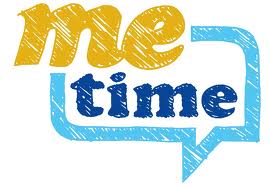
ME TIME: n. Time spent relaxing on one’s own as opposed to working or doing things for others, seen as an opportunity to reduce stress or restore energy

Pintermission: Addicted to Pinterest? You might want to take a break.

SELFIE: n. A photograph that one has taken of oneself, typically one taken with a smartphone or webcam and uploaded to a social media website

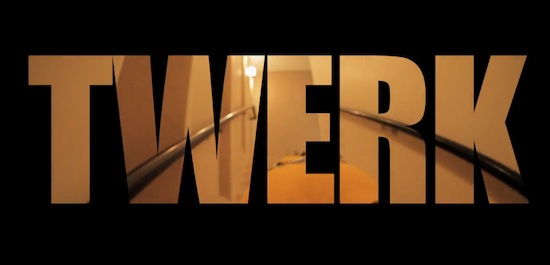
TWERK: v. Dance to popular music in a sexually provocative manner involving thrusting hip movements and a low, squatting stance

TWOOSH: A tweet that uses exactly 140 characters – we’re wondering how many people spend their time trying to achieve this?

UNLIKE: v. Withdraw one’s liking or approval of (a web page or posting on a social media website that one has previously liked)

WARBLOG: n. A weblog dealing with a war, or written by an active participant in or witness to warfare.


Have something to add to this story? Share it in the comments